Love Costa Rica MORE.
Learn Spanish for the life you’re building here.

Build confidence and fluency with eight personalized 60-minute lessons focused on real-life Costa Rican Spanish. Lessons are tailored to your level, goals, and pace, with practical conversation, vocabulary, culture, and the Spanish you’ll actually use in everyday life.

Personalized Spanish instruction with a Costa Rican focus, designed for your level, goals, and real-life communication. Learn to speak naturally, understand local expressions, and build confidence from anywhere.
Perfect for beginners, intermediate learners, and advanced speakers.
Whether you’re brand new to Spanish or already speaking at an advanced level, these private 60-minute lessons are designed to meet you exactly where you are and move you forward with confidence.
Taught by Scout MacKay, author of How to Speak Costa Rican Spanish, these lessons combine real-world language, cultural understanding, and expert teaching methods built around the way people actually communicate in Costa Rica.
Scout has lived in Costa Rica since 2006 and has taught students in Colombia, Mexico, Guatemala, and throughout Costa Rica. She has also worked as a translator for the Embassy of Peru in Mexico and brings years of professional and real-life language experience into every lesson. Married into a Guanacasteco family, Spanish is part of her everyday life — not just something from a textbook. She speaks Costa Rican Spanish daily, writes music in both Spanish and English, and deeply understands the cultural side of language learning.
Her teaching style is warm, adaptable, and highly effective for all learning styles and personalities. Lessons are customized to your pace, your goals, and your comfort level, whether you are working toward basic conversation, residency life, professional fluency, or full A1–C2 mastery.
Students don’t just memorize vocabulary — they learn how to truly live in Spanish, connect with people, understand Costa Rican culture, and communicate naturally in real-life situations. From complete beginners to students pursuing major career opportunities through language learning, Scout’s lessons are known for helping people gain real confidence and real results.
8 Private Spanish Lessons — Customized for You
This package includes 10 personalized one-on-one Spanish lessons designed around your level, your goals, and the way you learn best. Whether you’re starting from zero or refining advanced fluency, each lesson is carefully tailored to help you build real confidence speaking Spanish in everyday life.
Lessons focus on practical communication, authentic Costa Rican Spanish, listening comprehension, pronunciation, conversation skills, grammar that actually makes sense, and the cultural nuances that help you sound natural — not textbook.
Every student learns differently, so lessons are fully adaptable to your pace and learning style. Whether you need structured guidance, conversation practice, pronunciation coaching, survival Spanish for daily life in Costa Rica, or advanced fluency support, the lessons are built specifically for you.
Taught by Scout MacKay, author of How to Speak Costa Rican Spanish, these sessions blend immersive teaching, humor, culture, and real-life communication to help students truly connect with the language and life in Costa Rica.
Perfect for:
Expats living in Costa Rica
Travelers and digital nomads
Families relocating
Students preparing for residency or citizenship
Professionals needing conversational fluency
Anyone wanting to finally feel comfortable speaking Spanish naturally
These are not cookie-cutter classes.
They are Spanish lessons built around you.
Connect Through Language
Sí, Hablo! believes language is more than vocabulary—it's how people become part of a place.
We create accessible, practical Spanish learning resources designed specifically for Costa Rican Spanish. Through authentic conversations, local culture, and clear learning pathways, students build the confidence to communicate naturally, while teachers gain reliable, engaging materials that make learning meaningful.
Our programs support adults, teens, and children as they develop both language skills and cultural understanding. Because when people can truly communicate, everyday moments become opportunities for connection, mutual respect, and a stronger community—bringing Costa Ricans and the international community closer together.

Connecting Communities Through Costa Rican Spanish
Moving to Costa Rica is a leap of faith. You arrive surrounded by extraordinary beauty, welcoming people, and a culture that invites connection. Yet for many newcomers, one invisible barrier shapes everyday life: language.
It is easy to remain where communication feels comfortable. But every conversation in Spanish is a chance to step beyond that comfort and become part of the community around you.
Fluency doesn't begin with perfect grammar. It begins with courage—one greeting, one question, and one conversation at a time. As your Spanish grows, Costa Rica opens in ways no guidebook can teach. You begin to understand the humour, the stories, the traditions, and the expressions that reveal how Ticos see the world.
The goal isn't to leave your own culture behind. It's to gain another alongside it. Friendships deepen, everyday interactions become meaningful, and little by little, Costa Rica stops feeling like a place you're visiting and starts feeling like a place where you belong.
At Sí, Hablo!, we believe language is more than words. It is the bridge between cultures and the key to experiencing Costa Rica not simply as an observer, but as a participant.


Costa Rican Spanish
Language and culture cannot be separated.
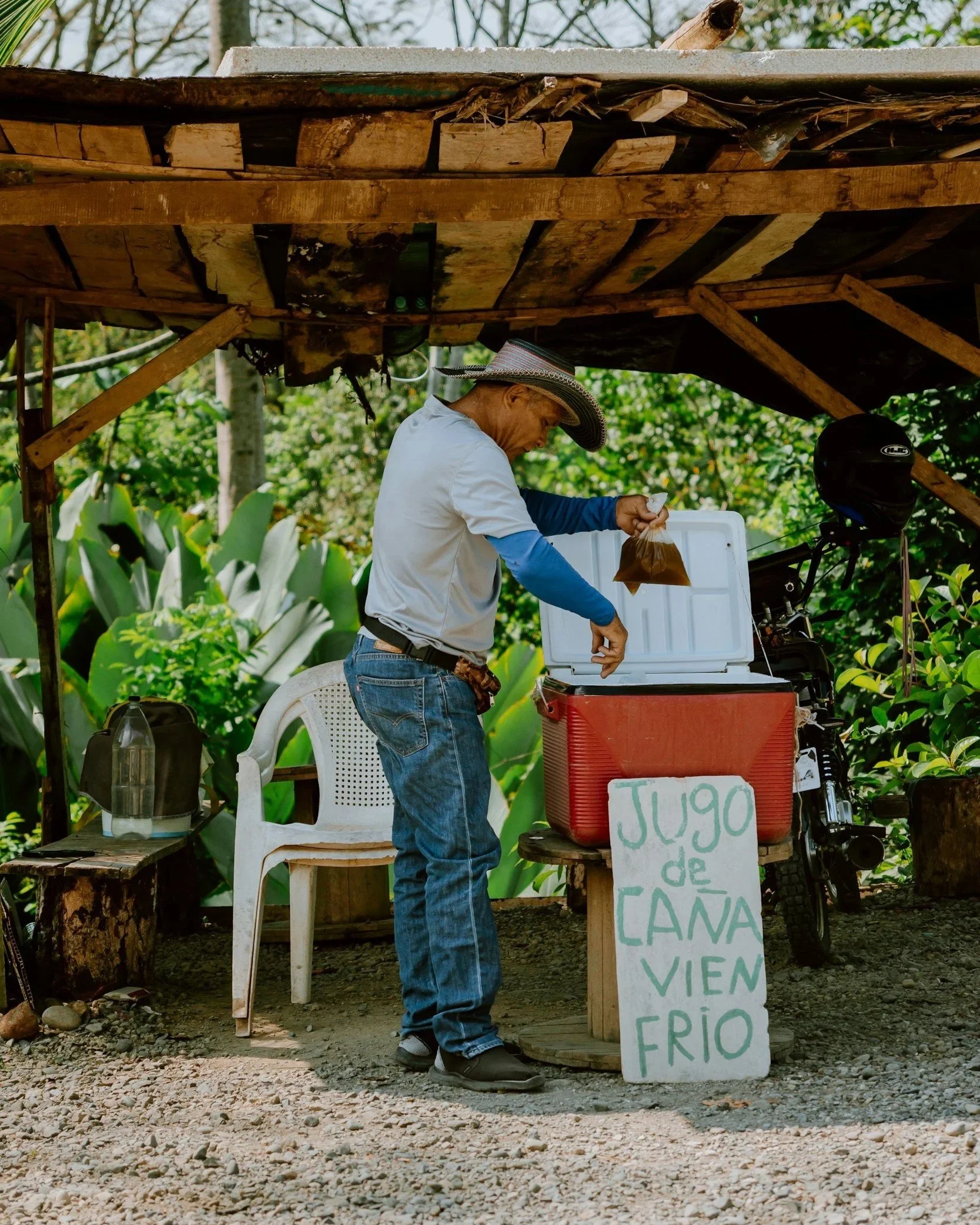
Costa Rican Spanish is not simply “Spanish with a Costa Rican accent.” Like every Spanish-speaking country, Costa Rica has developed its own dialect over generations, shaped by its history, geography, communities, and way of life. Its vocabulary, pronunciation, grammar, expressions, and conversational style have all been studied by linguists and universities as part of the rich diversity of the Spanish language.
And the fascination is not limited to people learning Spanish. Costa Ricans themselves are often fascinated by their own language—where their expressions come from, why they speak differently from other Spanish-speaking countries, and what their words reveal about the culture they share.
That is what makes learning Costa Rican Spanish so much more than learning vocabulary. It is learning to hear the country in its language: its humour, its politeness, its warmth, its history, and the countless expressions that make communication uniquely Tico.
At Sí, Hablo!, we teach Costa Rican Spanish because understanding a language means understanding the people who speak it—and discovering the culture that lives inside their words.

A Realistic Path to Fluency
Learning Spanish is one of the most rewarding investments you can make—not because of the language itself, but because of the doors it opens.
A conversation that would have never happened. A friendship that grows naturally. The confidence to belong instead of simply visit.
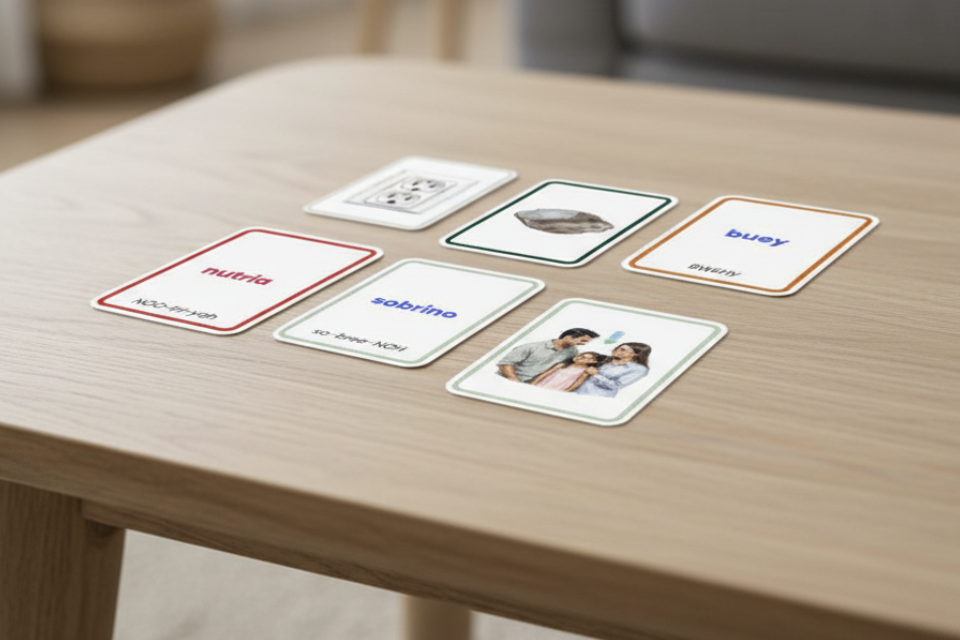
The Sí, Hablo! Method was shaped through years of teaching real students in Costa Rica and discovering the small changes that make the biggest difference. We've developed practical techniques that make Costa Rican Spanish easier to understand, remember, and use in everyday life.
Fluency isn't built overnight. But with the right method, each conversation becomes another door opening—into the culture, the community, and the life you've come here to experience.
Internationally Recognised Standards
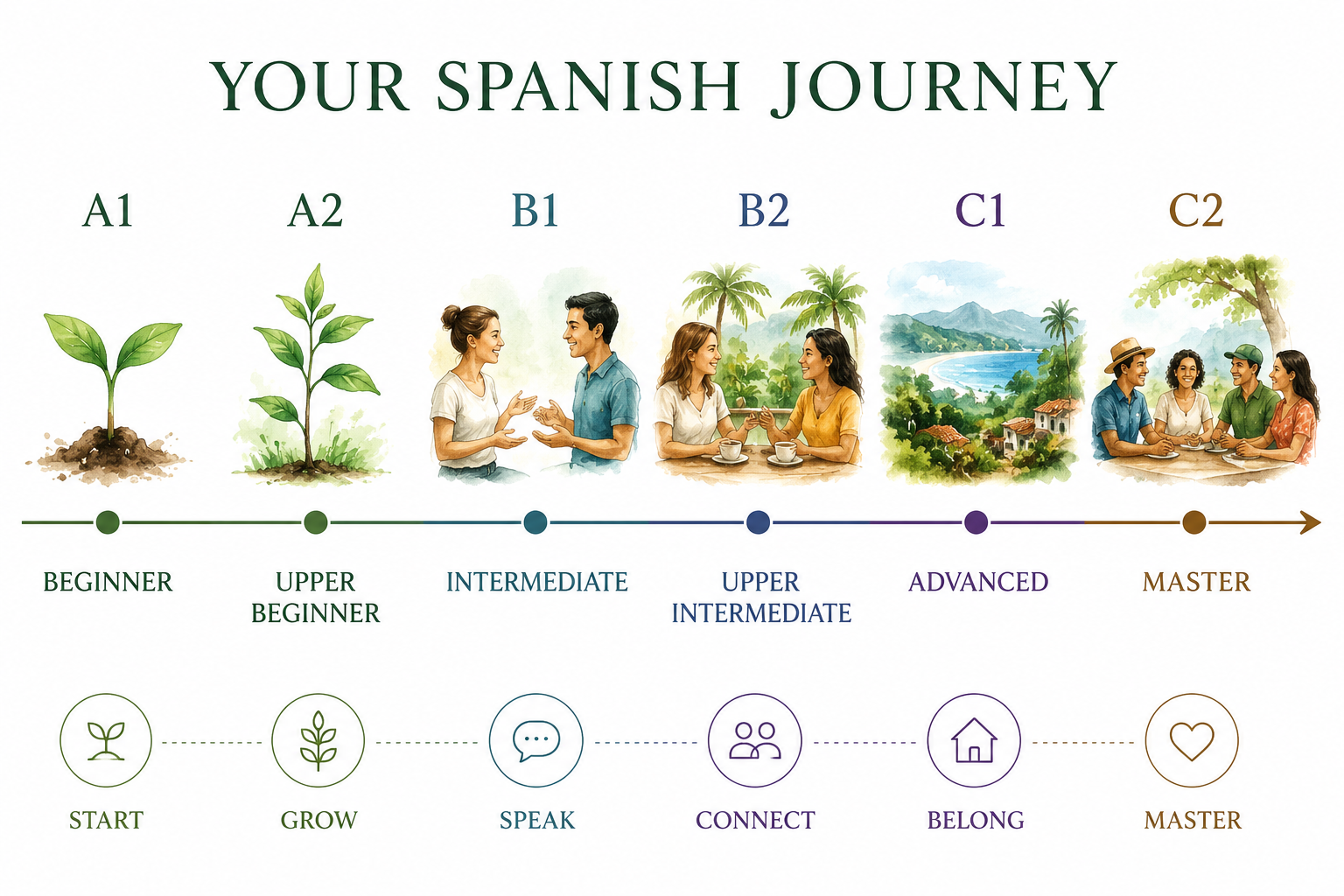
Our curriculum is organised around the Common European Framework of Reference for Languages (CEFR), the internationally recognised proficiency standard used by language schools, universities, and educational institutions around the world.
The CEFR provides a clear roadmap for language learning, dividing proficiency into six progressive levels—from A1 (Beginner) to C2 (Mastery). Rather than focusing only on grammar or vocabulary, each level describes what learners can realistically understand, communicate, and accomplish in real-life situations.
By following this internationally recognised framework, Sí, Hablo! offers students a structured, measurable path toward fluency while adapting each level to the language, culture, and everyday communication of Costa Rica.